Exchange traded funds (ETFs) have become one of the most popular ways for Australians to start investing. They’re simple, diversified, and accessible, making them an ideal entry point for first-time investors. But knowing how to buy your first ETF is where many beginners get stuck.
In this step-by-step guide, we’ll break down everything you need to know, from understanding how ETFs work, to choosing the right one and executing your very first trade. We’ve even included expert insights from Global X’s resident ETF specialist Jessica Leung, on what new investors should keep in mind.
What is an ETF? (Quick refresher)
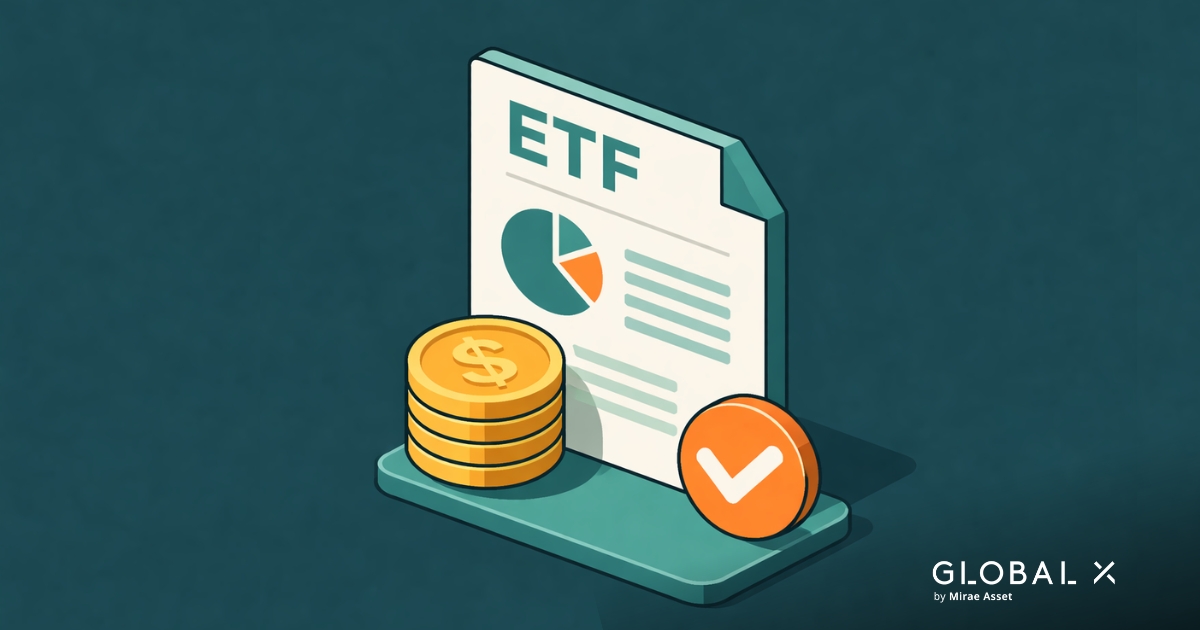
An exchange traded fund (ETF) is a fund that holds a basket of assets like shares, bonds, or commodities, and trades on an exchange just like a regular stock. When you buy one ETF unit, you get exposure to all the underlying holdings.
“For your first ETF, don’t overthink it,” says Jess. “Start with something broad, low-cost, and aligned with your long-term goals. Simplicity is your friend as a new investor.”
Why beginners love ETFs
- Diversification
- Low cost
- Easy access through a brokerage account
- Transparency
- Ability to invest with smaller amounts
Step 1: Define your investment goals
Before choosing an ETF, ask yourself:
- What am I investing for?
- What’s my time horizon?
- What level of risk am I comfortable with?
- Do I want growth, income, or both?
Global X portfolio manager Jessica Leung says a common mistake beginners make is starting with a product before a plan.
“Your goals and time horizon should guide the ETF you choose,” she says.
Step 2: Choose the type of ETF that aligns with your goals
Popular ETF categories for beginners:
- Broad market ETFs
- Thematic ETFs
- Fixed income ETFs
- Commodity ETFs
- Income & dividend ETFs
“There are hundreds of ETFs in the market, but you don’t need to look at all of them,” says Jess. “Narrow your choices based on your goals, then compare just a few key metrics.”
Step 3: Compare ETFs using key metrics
When comparing ETFs, consider:
- Fees
- Index methodology
- Liquidity
- Fund size
- Provider reputation
- Past performance (with caution)
“Don’t focus on one data point,” says Jess. “Look at the strategy, fees, and most importantly look under the hood ie what the ETF actually holds.”
Step 4: Open a brokerage account
Choose between:
- Traditional brokers (more guidance, higher fees)
- Online brokers (lower cost, widely used by first-time investors)
Once your account is open, verify your identity and deposit funds.
Step 5: Search for the ETF by ticker code
Use your broker’s search bar to look up the ETF using its ticker. Review its details:
- Price
- Market summary
- Charts
- Distribution history
The ETF provider’s website will also have full product documentation.
Step 6: Place your order
Most beginners choose between:
- Market order: executes immediately at current price
- Limit order: You choose the maximum price you’re willing to pay when buying (or the lowest price you’re willing to sell). It also offers more control.
Many new investors start with dollar-cost averaging, investing smaller amounts regularly.
“Limit orders help beginners feel more comfortable,” says Jess, “especially if the market is moving quickly.”
Step 7: Review and track your investment
Once your ETF is in your portfolio:
- Review periodically (not daily)
- Revisit your asset allocation
- Consider whether you want distributions reinvested
- Check for index methodology changes
‘Remember: ETFs are designed for long-term investing, not overnight results. Give your investment time to compound,” says Jess. “Checking in a few times a year is enough. The market moves every day, but your goals don’t.”
Common mistakes to avoid
- Chasing short-term performance
- Ignoring what the ETF actually holds
- Trading too often
- Overlooking fees
- Putting everything into one ETF
Checklist Summary: How to Buy Your First ETF
Before you invest
- Clarify your investment goals
- Determine your time horizon
- Identify your risk tolerance
- Decide what type of ETF suits your goals (broad market, thematic, income, etc.)
Researching ETFs
- Compare fees
- Understand the ETF’s index and methodology
- Check fund size and provider reputation
- Review liquidity and spreads
- Look at historical performance (with context)
- Read the ETF provider’s product information (PDS, fact sheet)
Setting up to buy
- Open a brokerage account
- Verify your identity
- Deposit funds
- Search for the ETF’s ticker code
Executing the trade
- Choose order type (market or limit order)
- Review the bid/ask spread
- Enter the number of units or investment amount
- Confirm the order
After you buy
- Check your holdings in your portfolio
- Decide whether to reinvest distributions
- Review your investment periodically
- Adjust or diversify as your goals evolve
Buying your first ETF doesn’t need to be complicated. With clear goals, a bit of research, and a simple strategy, you can take the first step toward building long-term wealth with confidence.
As Jessica Leung puts it: “Your first ETF doesn’t have to be perfect. What matters is getting started, learning the process, and building confidence as an investor.” For new investors, that mindset-paired with patience and consistency-can make all the difference.