The first wave of artificial intelligence transformed software, data analytics, and cloud computing. The next wave will be much more tangible. A new category of robotics called humanoids is emerging as a major long-term technological and investment theme, with the potential to reshape labour markets and industrial productivity.
Let’s X-Plain:
- What is a humanoid?
- What’s driving this new technology?
- What’s driving adoption?
- How big could the market become?
- Why are investors are paying attention?
What Is a Humanoid?
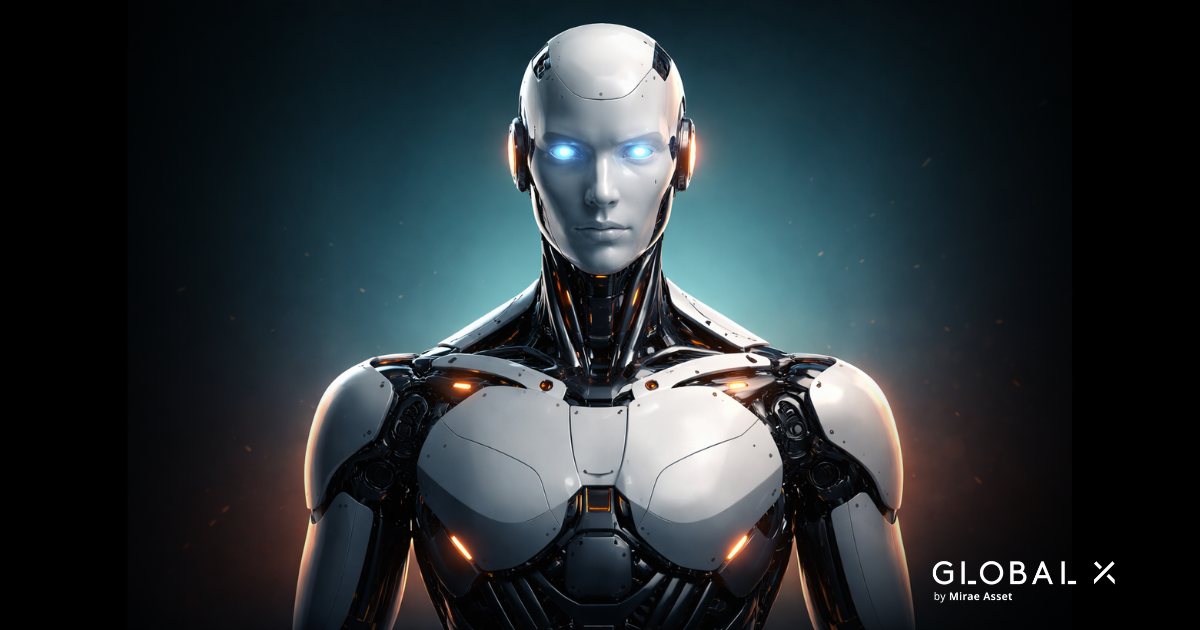
A humanoid is a type of robot designed to look, move, and operate like a human. While the term “robot” can refer to any programmable machine, humanoids are specifically engineered to function in environments built for people. Think factories, warehouses, offices, and even retail stores.
Unlike traditional industrial robots, which tend to be fixed machines performing highly specialised, repetitive tasks, humanoids are general-purpose. They can walk, lift, sort, manipulate tools, and navigate spaces designed for human workers. This versatility is why many analysts see humanoids as the next major frontier of automation.
What’s driving this new technology?
The shift from software-based AI to “physical AI” is being driven by several converging technological advances:
- More capable AI models enabling real-time perception and decision-making.
- Better sensors, allowing robots to understand complex environments.
- Improved batteries and precision components, reducing size, cost, and energy requirements.
These improvements mean that companies are beginning to run pilots in warehouses and manufacturing facilities. Early commercial uses already exist in customer service roles across retail, airports, hotels, and offices.
What’s driving adoption?
Two structural forces are accelerating demand:
Ageing populations and labour shortages
Many countries face shrinking workforces and rising demand for services, particularly in logistics, healthcare, and manufacturing. Humanoids can help address repetitive or physically demanding roles that are increasingly hard to fill.
A need for productivity gains
Businesses are under pressure to increase output while keeping costs under control. General-purpose robots capable of adapting to different tasks and environments offer a compelling solution.
How big could the market become?
The opportunity is enormous. Recent research estimates the humanoid market could reach US$5 trillion by 2050, with more than 1 billion humanoids in operation globally. Around 90% are expected to perform simple, structured, repetitive work across industrial and commercial settings. China is projected to lead adoption, followed by the US.1
To put this into perspective, the humanoid market could become twice the size of today’s global auto industry.2
And this estimate does not include the broader supply chain: components, sensors, manufacturing, repair, maintenance, and software ecosystems.
Why are investors are paying attention?
For investors, humanoids are not just a robotics story. They are an AI-plus-automation story that touches multiple sectors:
- robotics manufacturers
- semiconductor and sensor suppliers
- battery and energy-storage companies
- industrial automation software
- logistics, manufacturing, and healthcare operators
As costs fall and production scales, humanoids could become a new layer of the global workforce, unlocking productivity growth across industries much like PCs and industrial robots did in earlier eras.
Humanoids represent a major structural theme at the intersection of AI, robotics, and labour transformation. While still early, the pace of technological progress and pilot deployments from major global companies suggests that humanoids could become one of the defining investment stories of the next quarter-century.