For many Australians, investing for income has traditionally meant holding dividend-paying shares, term deposits or an investment property. But another asset class is rapidly attracting attention: fixed income.
In September, a record $1 billion flowed into Australian fixed-income ETFs as investors responded to rising interest rates and sought new sources of portfolio income. It is part of a broader trend of Australian investors using ETFs to gain exposure to a variety of income options.
But what exactly is fixed income, and how can it fit into an investment portfolio?
What is fixed income?
When investors buy shares, they are purchasing a small ownership stake in a company. Fixed-income investing is different. It generally involves lending money to a government, bank or company by investing in a bond or another form of debt.
In return, the issuer usually agrees to make regular interest payments and repay the original amount borrowed when the security reaches maturity. This regular interest helps explain the term ‘fixed income’, although not every security pays a fixed rate.
Fixed-income investments come in many forms. Government bonds help fund public spending, while corporate bonds allow companies to raise capital. Some securities pay a fixed rate of interest, while floating-rate securities make payments that move with a benchmark interest rate.
What role can fixed income play?
Fixed income is generally considered part of the defensive allocation in a portfolio. While no investment is risk-free, bonds have historically tended to be less volatile than shares. They can also serve several purposes:
- Generating income: Interest payments may provide a regular source of portfolio cash flow.
- Improving diversification: Bonds can behave differently from shares as economic and market conditions change.
- Reducing volatility: An allocation to fixed income may help cushion a portfolio during periods of sharemarket weakness.
- Preserving capital: Higher-quality bonds can help investors place greater emphasis on protecting capital, although their market value can still rise and fall.
The appropriate allocation will depend on an investor’s objectives, time horizon and risk tolerance. For example, a retiree seeking regular income may use fixed income differently from a younger investor building a diversified long-term portfolio.
Fixed-income ETFs have made this asset class far more accessible. Like a share, an ETF can be bought and sold on the ASX through a brokerage account. A single trade can provide exposure to a portfolio of bonds, potentially making diversification simpler and more accessible.
Looking beyond bank shares
The Global X Australian Bank Credit ETF (ASX: BANK) is one example of how an ETF can be used to access fixed income.
Australians are familiar with investing in bank shares, but banks also raise money by issuing debt. BANK invests across three parts of the Australian banking capital structure: senior bonds, subordinated bonds and hybrid securities. It holds both fixed and floating-rate securities, while excluding ordinary bank shares.
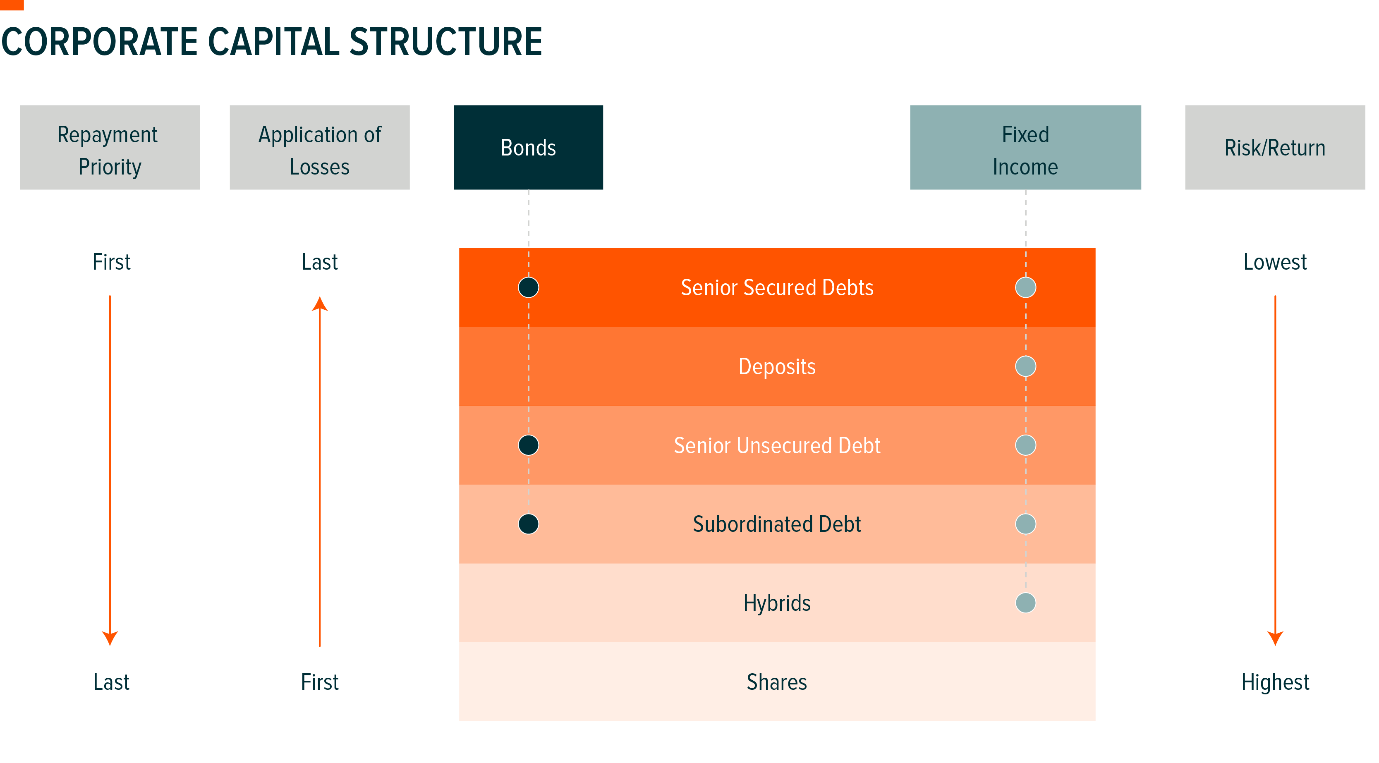
Senior bonds sit higher in the capital structure and generally have priority for repayment if an issuer fails. Subordinated bonds rank below them, so they usually carry greater risk and may offer additional income. Hybrids combine characteristics of debt and equity and sit lower again, making them more complex and potentially riskier.
By bringing these securities together, BANK provides diversified exposure to Australian bank credit through one ASX-listed investment.
Of course, income is not guaranteed. Bond prices can fall when interest rates or credit conditions change, and investors may lose capital. BANK also concentrates on securities issued by Australian banks, so it should be considered as part of a broader portfolio rather than viewed as a replacement for diversification.
For Australians who have previously looked only to dividends or deposits for income, fixed-income ETFs offer another option. Their record popularity suggests more investors are discovering that a portfolio’s income engine does not have to run on shares alone.