After more than a decade of falling interest rates, the income jungle has become more complicated. Inflation has returned, interest rates have risen sharply and traditional sources of portfolio income are no longer as dependable as they once appeared. At the same time, investors are facing higher living costs and, for many, a greater need for their investments to contribute to their income. The result is a simple shift in mindset for investors. Income is back in fashion, but finding it requires a more diverse toolkit.
The Return of Fixed Income
Perhaps the biggest change has been in bonds. For decades, the structural decline in interest rates made fixed income increasingly challenging for investors seeking meaningful income. That changed dramatically after the inflation shock of 2021 and 2022, as central banks lifted rates at the fastest pace in decades.
Now, the pendulum has swung in the other direction. The RBA increased the cash rate multiple times this year, while long-term Australian government bond yields have risen to their highest levels in years. Globally, bond yields have also been rising again as inflation pressures and expectations for higher interest rates have resurfaced.
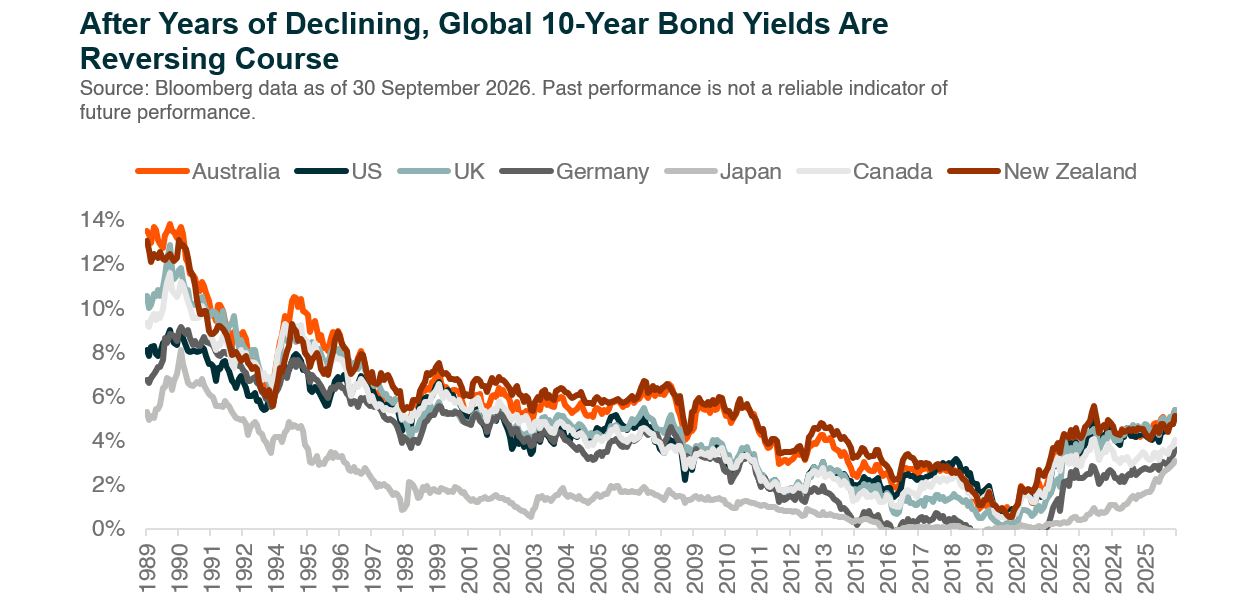
For income investors, that matters. The asset class once known primarily for diversification is once again offering a meaningful source of portfolio income. In other words, the “income” is back in “fixed income”.
Australian Dividends Have Been Through A Drought
Equities tell a different story. Australian investors have historically had an advantage when it comes to dividend income, thanks in part to the country's mature corporate sector, high payout ratios and dividend imputation system. Yet the past few years have been difficult for income seekers.
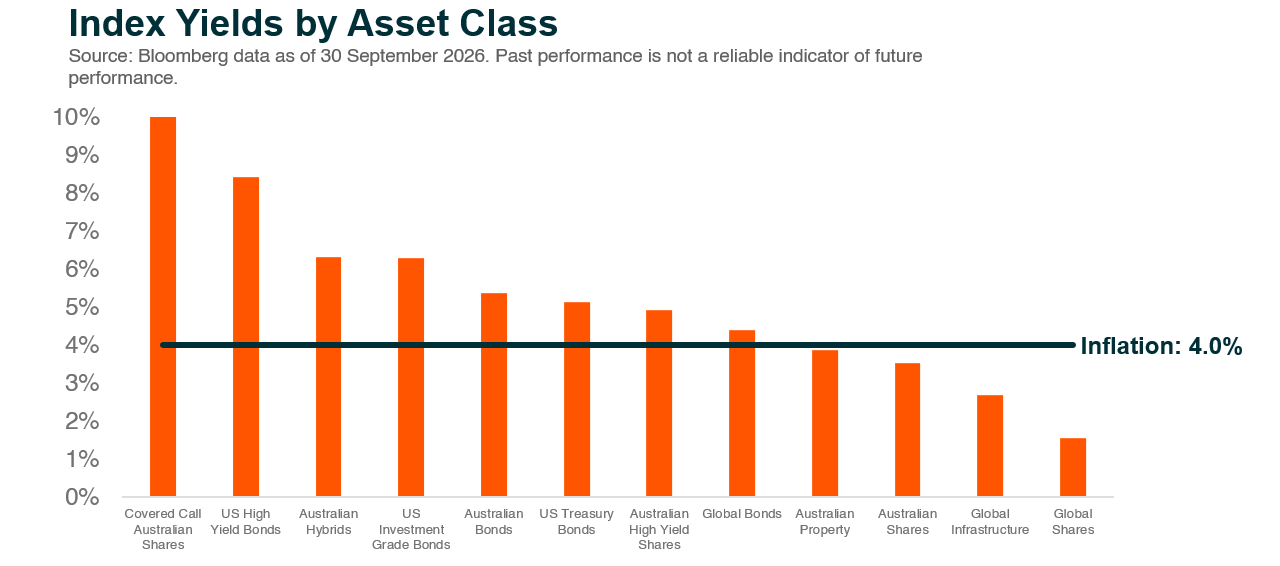
The Australian market has experienced what some describe as a "dividend recession" over the past few years. The Australian dividend yield has fallen to their lowest levels in decades, outside of the COVID-19 pandemic, highlighting how much the income landscape had changed from the higher-yield environment investors had become accustomed to.
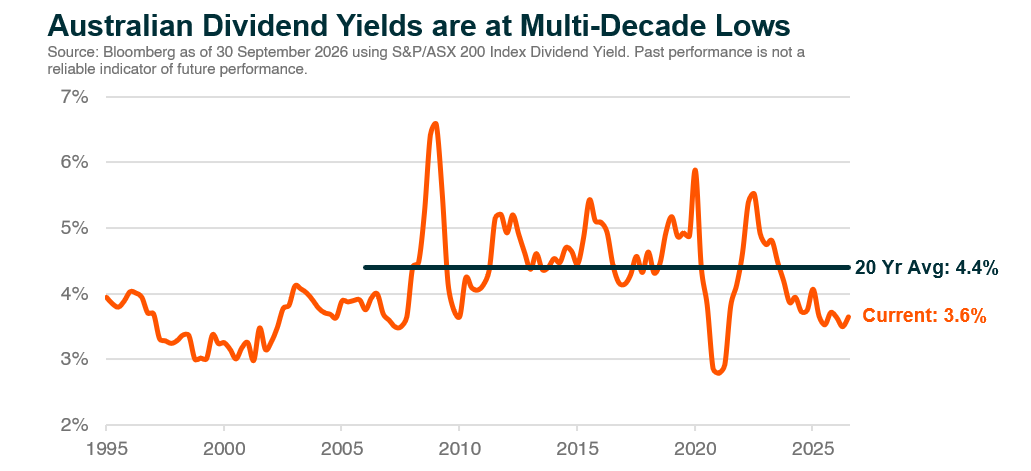
There are signs of recovery with the 2026 August reporting season seeing some revitalised signs in dividend increases, but the lesson remains relevant - a portfolio built around one source of income can leave investors exposed when that source dries up.
Property Isn't the Income Solution it Once Was
Property is another familiar path through the income jungle, but it comes with its own challenges.
Australian residential property remains heavily reliant on capital growth, while rental yields are relatively modest compared with the cost of financing. National gross rental yields are hovering in the mid-to-high 3% range1, even as borrowing costs have risen while rents have appreciated too. For an investor carrying debt, the difference between rental income and borrowing costs can therefore be significant. And importantly, that headline rental yield is before accounting for costs such as interest, maintenance, insurance, rates and property management.
Property can still play an important role in a portfolio, but for investors specifically seeking liquid, diversified and regular income, it is not necessarily the straightforward income solution it may once have appeared to be.
The Tax Equation is Changing
The Federal Government's capital gains tax reforms announced at the 2026 Budget adds another dimension to the income conversation.
From July 2027, the Government plans to replace the existing 50% CGT discount with an inflation-based cost-base adjustment on realised capital gains and introduce a 30% minimum tax on real capital gains after the application of capital losses. The changes do not make income automatically superior to capital growth, and investors will still need to consider their individual circumstances. However, they do change the relative after-tax equation between income and capital growth.
It could be that income-focused paying investments could become more attractive on an after-tax basis. For investors focused on generating spendable income, that makes the question of where returns come from increasingly important. Investors have already started to take notice, with record flows into specific income-oriented strategies in recent months suggesting the changing tax landscape is beginning to influence how portfolios are being constructed.2
Cost of Living Crisis and Keeping Up
Even as nominal wages have continued to rise, they have struggled to keep pace with the cost of living. Real wages have gone backwards for multiple quarters, with inflation outpacing wage growth and eroding the purchasing power of household incomes.3
At the same time, Australians continue to face elevated household costs and persistent cost-of-living pressures. For retirees, pre-retirees and investors looking to supplement employment income, simply generating a return may not be enough. Income needs to be reliable, diversified and capable of adapting to a changing inflation and interest-rate environment.
This makes diversification increasingly important. Rather than relying on a single source of income, investors can build multiple income engines across different asset classes, from dividends and fixed income to alternative sources such as covered calls. The aim is to build a more diversified and resilient income stream that can help support cash flow and purchasing power.
Navigating the Income Jungle
The good news is that income investors have more tools at their disposal than ever before. ETFs have opened up a broader range of diversified income-producing assets, giving investors efficient access all within a single trade. There is no longer just one path through the income jungle. The challenge is understanding the different sources of income, the risks that come with them and how they can work together. For Australian investors, income is back on the agenda and the opportunity set is now bigger than ever.