Australia has long been a nation of income investors. From retirees funding their lifestyle to investors reinvesting distributions to build wealth, dividends have played an important role in the Australian investment landscape. After several challenging years for company payouts, there are signs the tide may finally be turning. The August 2026 reporting season delivered a welcome improvement in dividends, creating an opportunity for investors to reconsider how income could support their broader investment strategy. While the appeal of high-yielding stocks is understandable, the highest yield does not always translate into the most reliable income. Investors need to look beyond the headline figure to understand where dividends come from, how sustainable they are and how to build a diversified portfolio capable of generating income across different market conditions.
Australia's Dividend Engine Has Struggled But is Showing Signs of Life
For Australian investors, dividends have historically been a powerful contributor to long-term wealth creation. Alongside capital growth, they provide a tangible return from owning businesses, with the potential to reinvest distributions or use them to fund living expenses. In fact, dividends have been a major driver of the Australian share market’s total return over the long term.
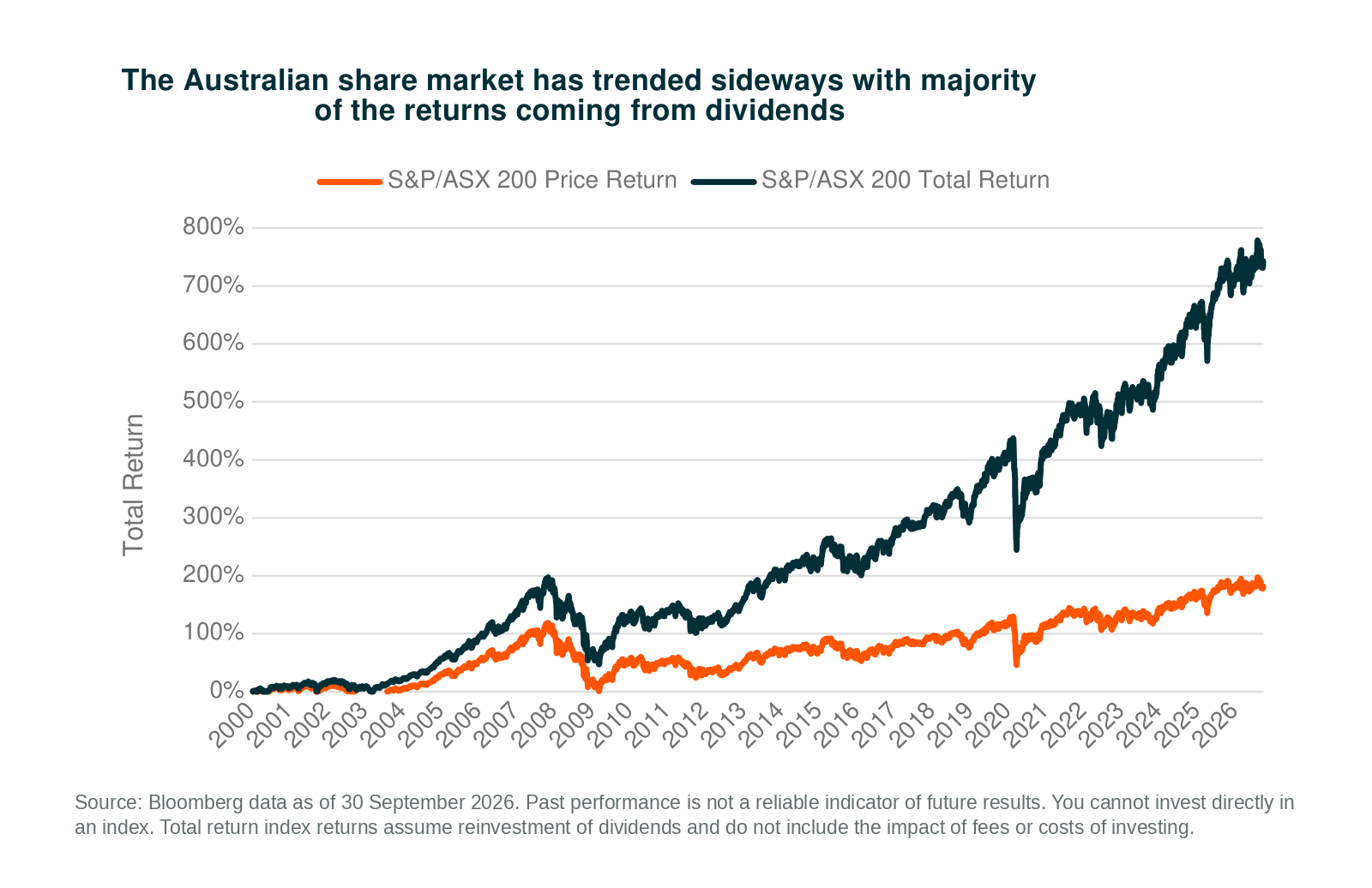
However, since 2022, investors have faced a prolonged dividend drought, with distributions declining for three consecutive years. As share prices continued to rise, dividends struggled to keep pace, pushing the broader market’s yield lower and making it increasingly challenging for income-focused investors to generate attractive cash flow.
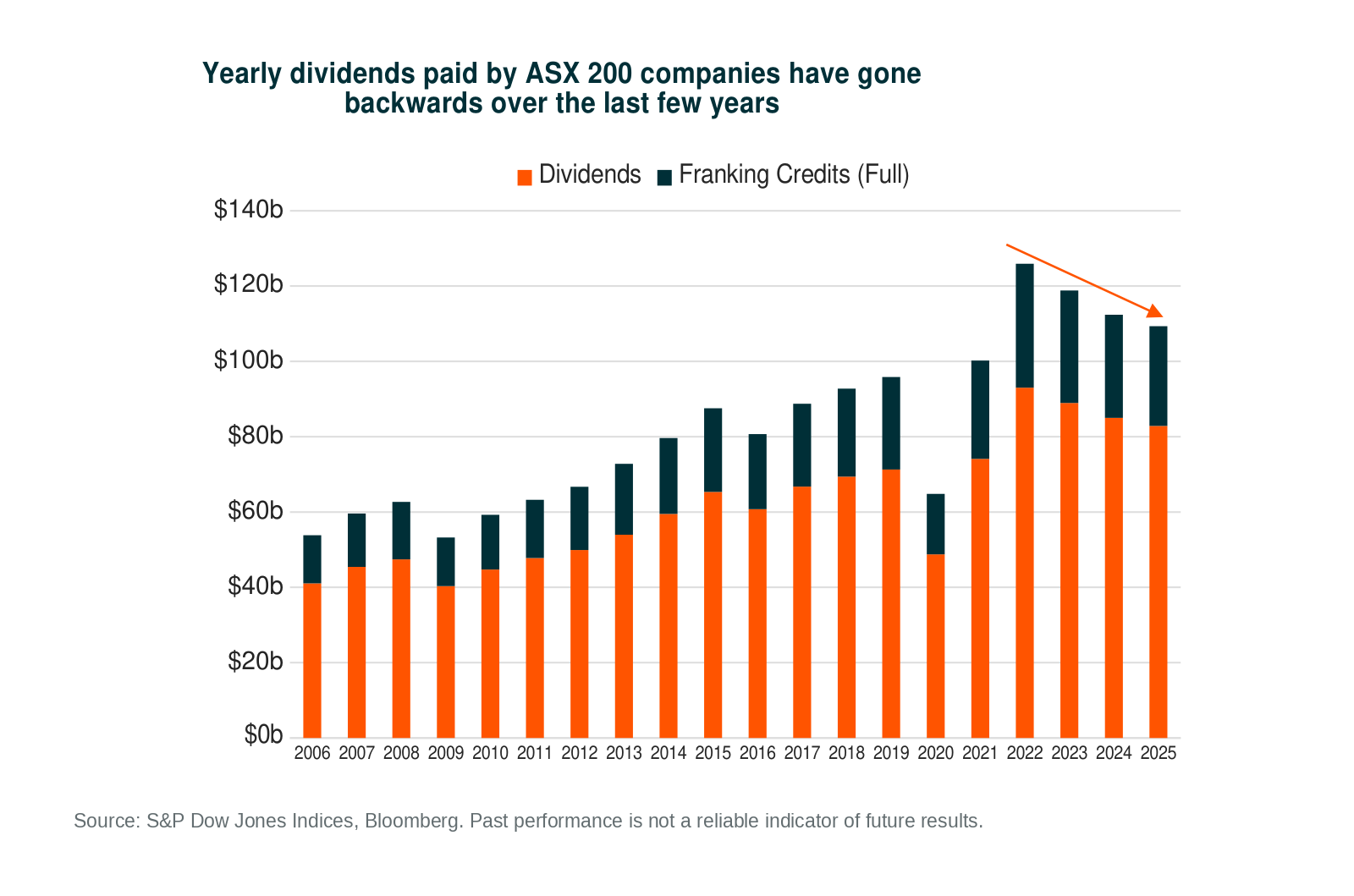
The August 2026 reporting season offered encouraging signs of a recovery. Total value of dividends declared by S&P/ASX 200 companies increased 13% compared with the corresponding prior period with two thirds of companies raising their dividends.1 While one reporting season does not guarantee a sustained recovery, the improvement suggests the income outlook may be becoming more constructive. This matters because dividends can play several roles in an investment portfolio. For investors drawing an income, distributions can help meet spending needs without requiring them to sell investments. For those still accumulating wealth, reinvesting dividends can help compound returns over time. And for investors heavily exposed to growth-oriented assets, dividend strategies can introduce different companies, sectors and sources of return.
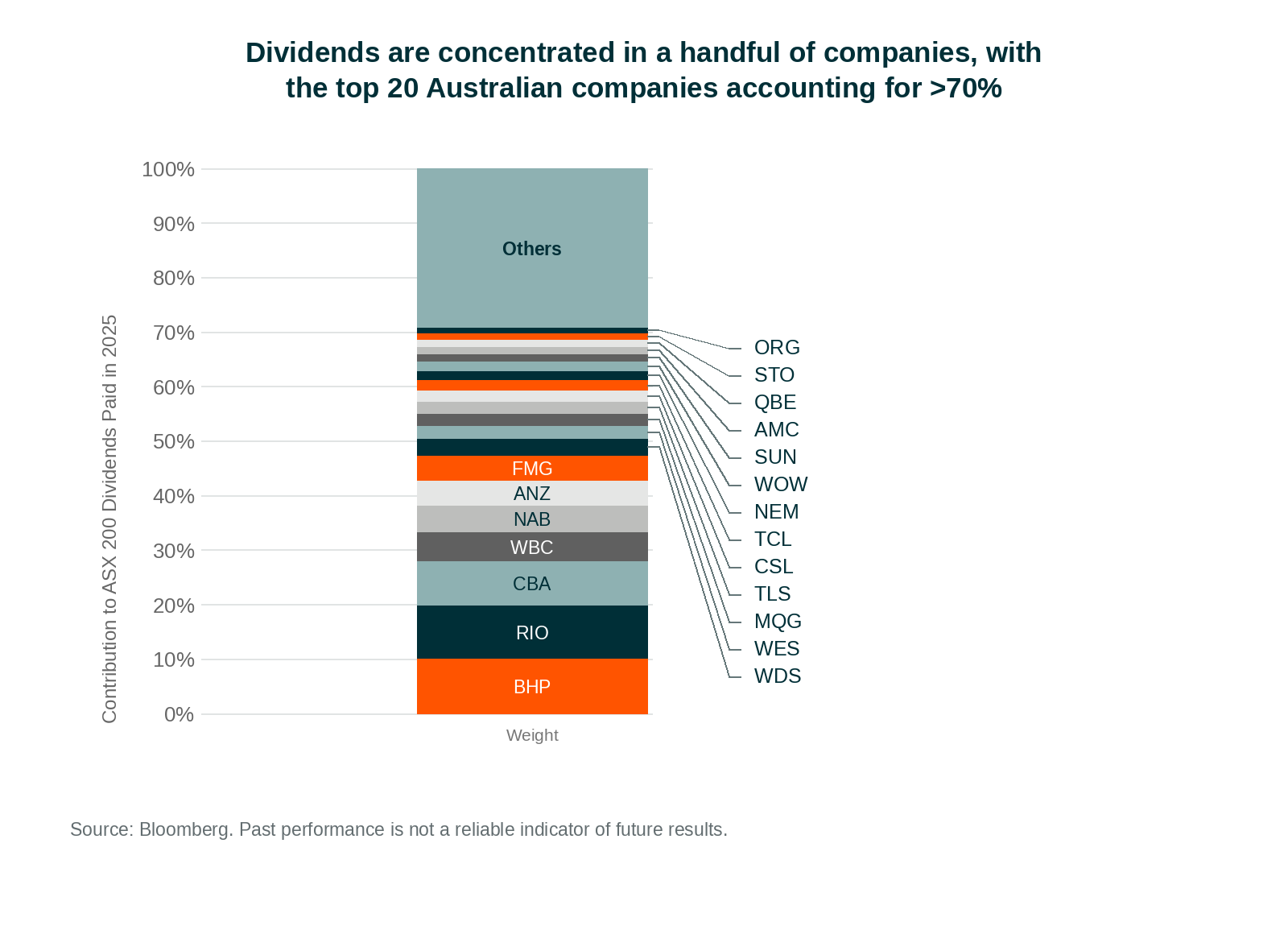
Australia's relatively high corporate payout ratios have made our nation a tantalising place for income-orientated investors. Yet income is not guaranteed, and the concentration of Australian dividends among a relatively small number of companies makes it important to think carefully about where that income comes from.
Avoid the Alluring Inflated Yields of Dividend Traps
A high dividend yield can be tempting, but the biggest number is not always the best investment opportunity. Dividend yield is calculated by dividing a company's annual dividend by its share price. When a share price falls sharply, its yield can rise even if the company's underlying business is deteriorating. If earnings and cash flow weaken further, the dividend may eventually be cut, leaving investors with both less income and a potential capital loss.
Consider Nine Entertainment, whose trailing dividend yield was reported at an extraordinary 51.2%, inflated by a special dividend following the sale of its stake in Domain. Yet its forecast dividend yield for 2026 was in the single digits, highlighting how one-off payouts can distort historical yields and create a misleading picture of a company's ongoing income potential. Likewise, companies such as AMP, Lendlease and Myer demonstrate that an attractive trailing yield is no guarantee of success, with all three delivering negative total returns over the past decade despite their appeal to income-seeking investors.2
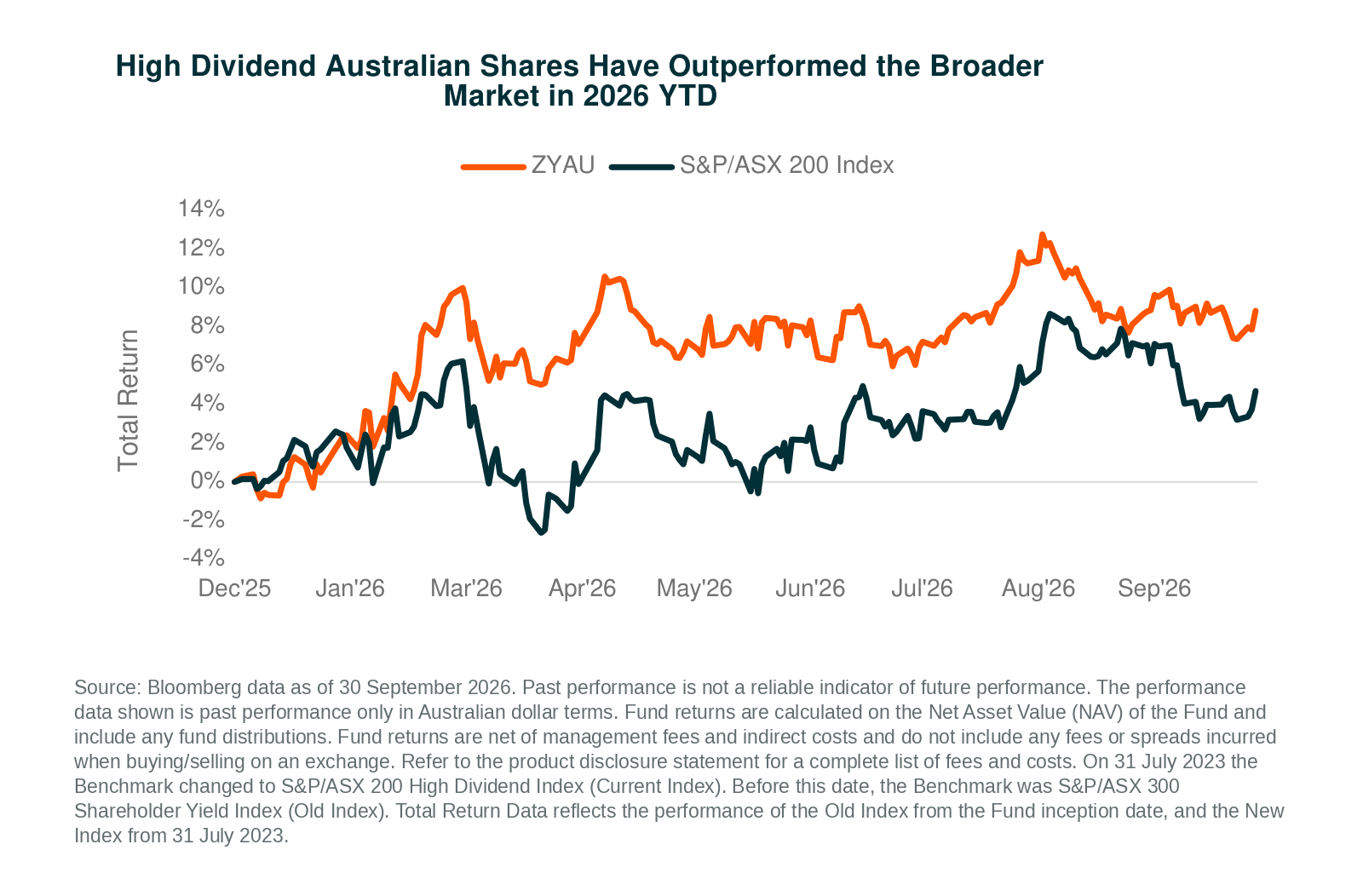
A more disciplined approach when it comes to high dividend investing considers forward-looking dividends, applying diversification screens, and ensuring that dividend traps are not included in the portfolio. The Global X S&P/ASX 200 High Dividend ETF (ASX: ZYAU) incorporates this principle into its investment approach. Its underlying index selects high-dividend Australian companies using forecast dividend yields and excludes stocks ranked in the bottom 10% by momentum, while maintaining relative sector weights to the broader market. In other words, it screens out the weakest-performing decile of stocks from its eligible universe, helping reduce exposure to companies whose elevated yields may reflect deteriorating share prices.
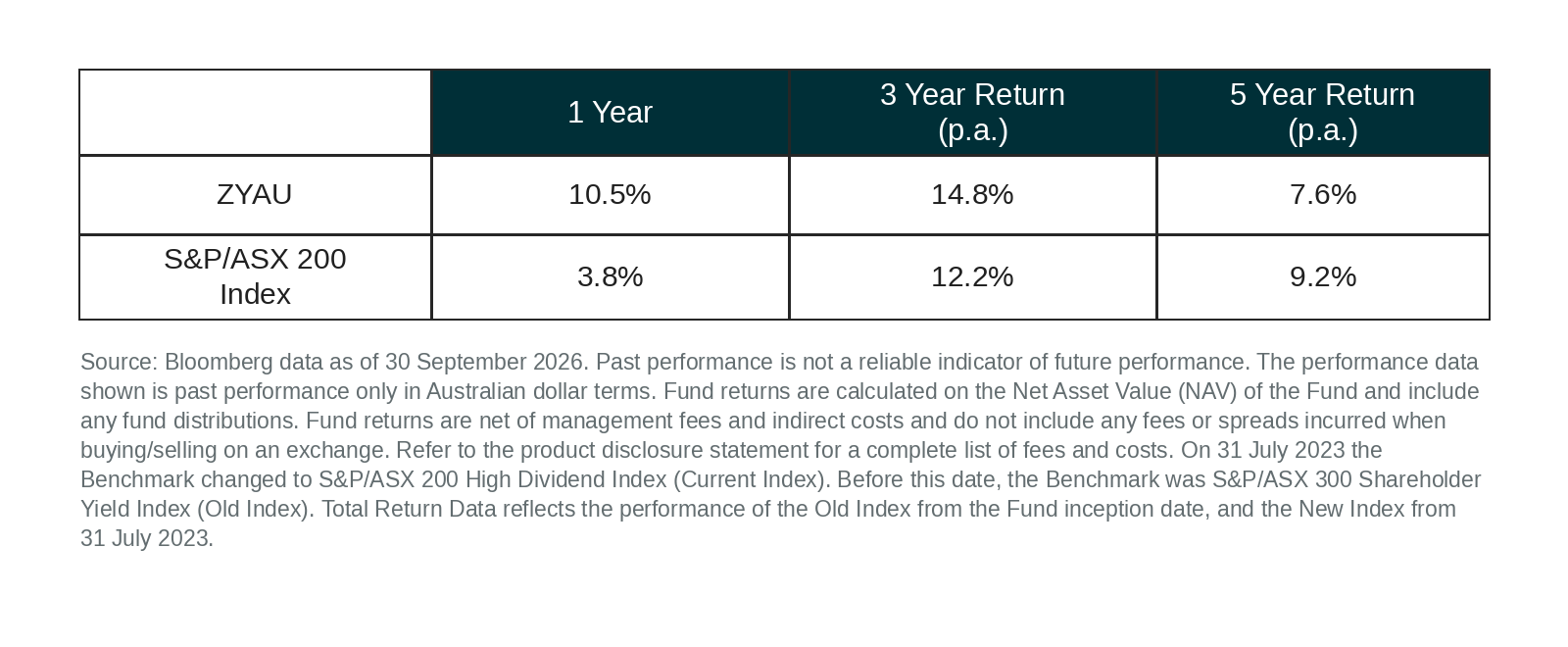
Income investing has been particularly attractive so far in 2026, with high-dividend strategies such as ZYAU outperforming the broader Australian share market, highlighting the potential for dividend-focused approaches to deliver competitive returns while providing investors with a valuable source of portfolio income.
For investors, the lesson for dividend investment is to focus on the sustainability of income, not just the size of the yield. A thoughtful approach can help investors pursue attractive dividends without blindly chasing companies that may struggle to maintain them.
Broadening Income Opportunities Beyond Australia
Australian shares may be a natural starting point for income investors, but relying exclusively on domestic dividends can leave portfolios concentrated in a relatively narrow group of businesses. Banks and resources companies account for a substantial share of Australian market dividends. This means an investor can own numerous Australian shares yet remain heavily exposed to the same economic drivers, from credit conditions to commodity prices.
International equities offer another source of potential income. The US market provides access to dividend-paying businesses across sectors such as healthcare, consumer staples, utilities and energy, broadening the range of companies contributing to portfolio cash flow.
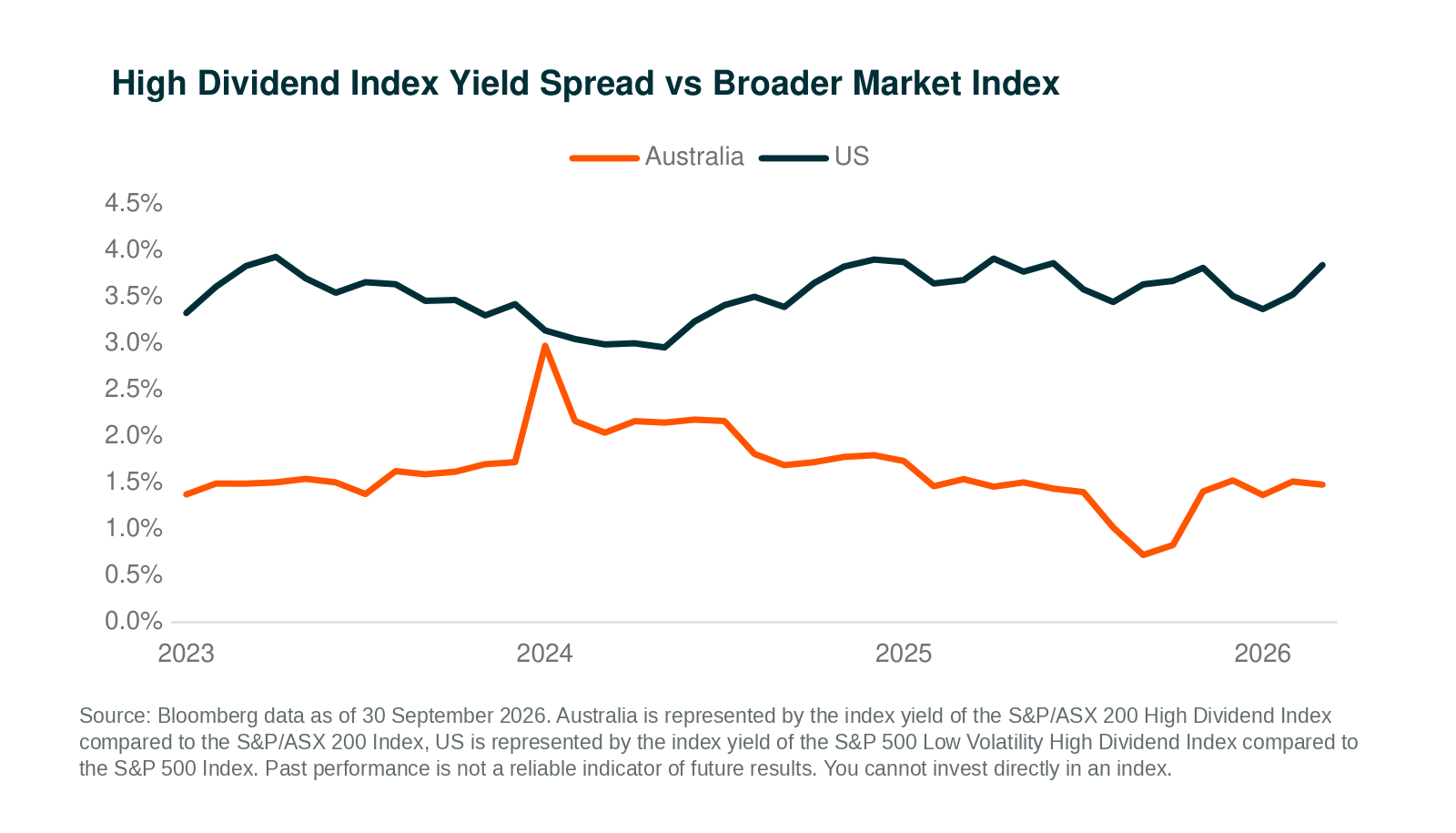
The Global X S&P 500 High Yield Low Volatility ETF (ASX: ZYUS) offers exposure to selected high-dividend US companies, with a low-volatility screen helping determine which companies are included. It can complement Australian equity income by introducing different businesses, sector exposures and geographic diversification. While a high dividend Australian income strategy has historically yielded 1-2% above the broader domestic benchmark, the US-based strategy has yielded 3-4% above the broader US benchmark. Together, ZYAU and ZYUS illustrate how investors can approach equity income across domestic and international markets, rather than relying solely on Australia's traditional dividend payers.
Tax considerations may also influence portfolio decisions. Australia's latest capital gains tax reforms, applying to relevant gains accruing from 1 July 2027, will change the treatment of capital gains for affected investors. This could encourage investors to place greater emphasis on income-generating investments and potentially incentivise companies to increase dividend payouts to remain attractive to shareholders, potentially when investors think about tax-effective forms of returns.
Dividends May Deserve a Place in Portfolios
The improvement in dividends during the August reporting season is a timely reminder of the role income can play in building and maintaining wealth. Whether the goal is to supplement retirement spending, reinvest distributions or diversify a growth-focused portfolio, high-dividend investing offers another way to think about equity returns. The important distinction is between chasing yield and pursuing sustainable income. By considering future dividends, avoiding potential traps and diversifying across companies, sectors and countries, investors can make income a more deliberate part of their investment strategy.