There are two reliable ways to make investors nervous. The first is for markets to fall. The second is for them to rise so dramatically that everybody starts wondering when they will fall. The AI trade has managed to do both.
Recent volatility has revived an uncomfortable question: is the AI boom beginning to unravel, or is the market simply becoming more selective?
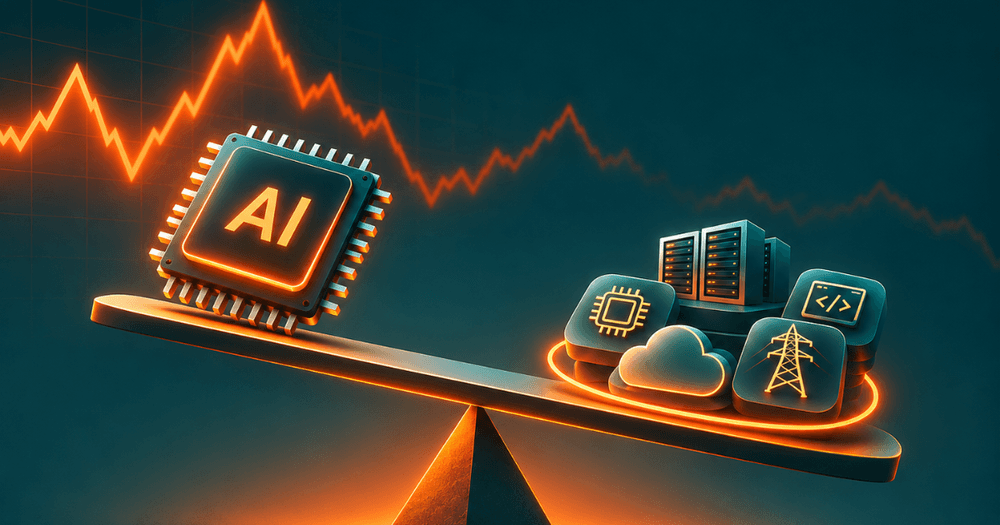
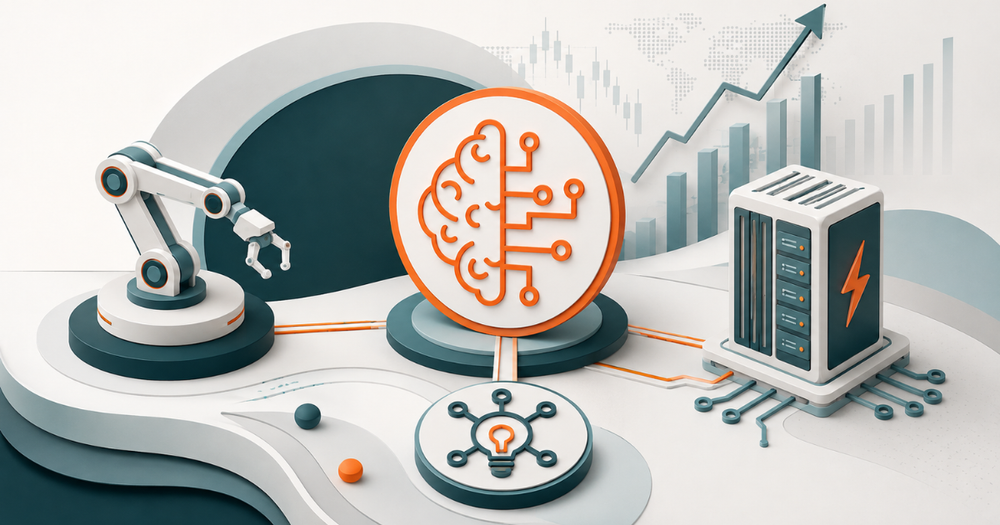
One important thing to remember is that the ‘AI trade’ is not one company, sector, or country. It stretches from semiconductor manufacturers and data-centre operators to cloud platforms, software developers, commodities, power providers and the companies building AI models. They may all benefit from the same technological shift, but they do not carry the same risks, and they will not all be rewarded at the same time.
Some specialist AI cloud providers, often called neoclouds, have borrowed heavily to buy chips and build computing capacity ahead of demand. Closer to home, Firmus has lined up billions in debt to build AI capacity, while data centre operator NextDC has tapped both equity and debt markets to fund its expansion. When funding becomes more expensive, shareholders and lenders get nervous. That does not mean demand for AI has disappeared, but rather that investors are paying closer attention to how each company funds its ambitions.
In other words, the market is beginning to separate the AI businesses with strong demand, sustainable finances and defensible positions from those built on more optimistic foundations.
For investors, this makes trying to select the ‘ideal’ AI stock increasingly fraught.
The trouble with picking a winner
A company can sit at the centre of an exciting long-term trend and still prove to be a disappointing investment. History has shown this many times over.
A company’s valuation may already assume years of exceptional growth. Its balance sheet may be carrying more risk than first appears. A competitor may develop better technology. Or the greatest economic benefit may flow to another part of the AI supply chain altogether.
Even a brilliant company can be a poor investment if its share price assumes perfection. This is where diversification becomes critical.
Rather than attempting to predict which semiconductor manufacturer, cloud provider, software developer or data-centre operator will ultimately dominate, investors are increasingly using ETFs to gain exposure across the AI value chain.
To be clear, this won’t guarantee immunity to a fall in the broader theme, nor does it guarantee that every company in the portfolio will succeed. It does, however, reduce the consequences of getting one individual bet spectacularly wrong.
Our GXIQ research found that more knowledgeable investors were more likely to use ETFs than investors with lower levels of investment knowledge. And they use ETFs to diversify their portfolios. There is a practical logic behind this behaviour: diversification is a recognition that, in a fast-moving market, nobody can know with certainty.
Follow the evidence, not the anxiety
Investors should still monitor whether the underlying AI investment case is holding up.
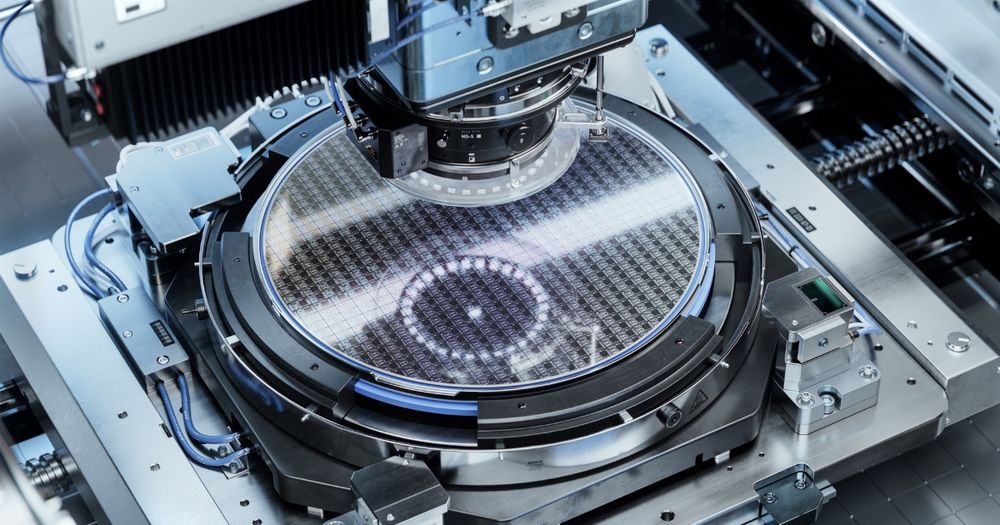
Semiconductor demand is one useful signal because advanced chips provide the processing power behind AI. For now, the evidence suggests underlying demand remains strong. TSMC has raised its full-year 2026 revenue growth guidance to 44%, while demand for AI computing capacity continues to exceed available supply.
The second signal is whether AI is starting to pay its own way. The past few years were about building capacity, and the next few will be about turning that capacity into revenue through cloud services, advertising, software and the AI models themselves. With the companies building those models now preparing to list on public markets, investors will soon have a much clearer view of the economics. When the biggest spenders can show AI is lifting earnings rather than just costs, the investment case strengthens, and when they cannot, the market will notice quickly.
But strong demand across the industry does not mean every AI-related company will prosper equally. The next phase of the AI trade is likely to be less forgiving. Some balance sheets will creak. Some valuations will prove to have been assembled with more optimism than arithmetic. The market will continue separating businesses capable of financing and delivering the AI boom from those merely selling the dream.
For anxious investors, the objective is not necessarily to identify the winner in advance, but to remain sensibly diversified while the market naturally works it out.