In an environment where global equity markets are increasingly dominated by a small number of large-cap companies, investors may be increasingly exposed to a growing degree of concentration risk. Against this backdrop, small and mid-cap (SMID) companies represent an important source of diversification, providing exposure to a broader opportunity set beyond the market's dominant leaders. While some investors may associate moving down the market-cap spectrum with taking on additional risk, the reality is that the fundamental profile of the segment has evolved considerably. SMIDs have more recently been characterised by stronger balance sheets and improving quality metrics, while continuing to trade at historically attractive valuation levels. When combined with a large-cap allocation, they provide more complete exposure across the full capitalisation spectrum and offer investors a potential opportunity as markets search for the next generation of leaders.
Key Takeaways
- Diversification Beyond Large Caps: SMID investing offers exposure beyond mega-cap-dominated technology companies, broadening sector diversification, and providing access to businesses that could drive the next phase of market leadership.
- Access Evolving Business Leaders: SMID companies have demonstrated improving profitability and quality characteristics, while at times trading at more attractive valuations than their large-cap peers.
- Index Solution to an Active Segment: The Global X MSCI International Small and Mid Cap ETF (ISMD) is Australia's first index-based ETF to provide cohesive exposure across the dedicated global small and mid-cap segment, offering a transparent and lower-cost way to access a market traditionally dominated by active managers.
Defining the SMID Market
Small and mid-cap (SMID) equities, broadly defined as companies with smaller market capitalisations than traditional large-cap companies, offer exposure to a broader segment of the market that is often underrepresented in investor allocations. This includes companies at earlier stages of their growth lifecycle, as well as those transitioning into larger and more established businesses. As a result, investing in SMIDs potentially provides the ability to capture growth earlier while maintaining exposure as companies scale, rather than losing exposure as businesses graduate from traditional small-cap indices.
Many of today's household names were not always market heavyweights. Before becoming dominant large-cap businesses, companies often spend years in the SMID universe building market share, expanding earnings and proving their business models. For investors, this creates the opportunity to participate in a company's growth journey before it becomes broadly represented in major indices. While not every SMID company will become tomorrow's market leader, the segment has historically provided a fertile hunting ground for identifying businesses in the earlier stages of their development and potentially deliver returns that compare favourably with their large-cap counterparts.
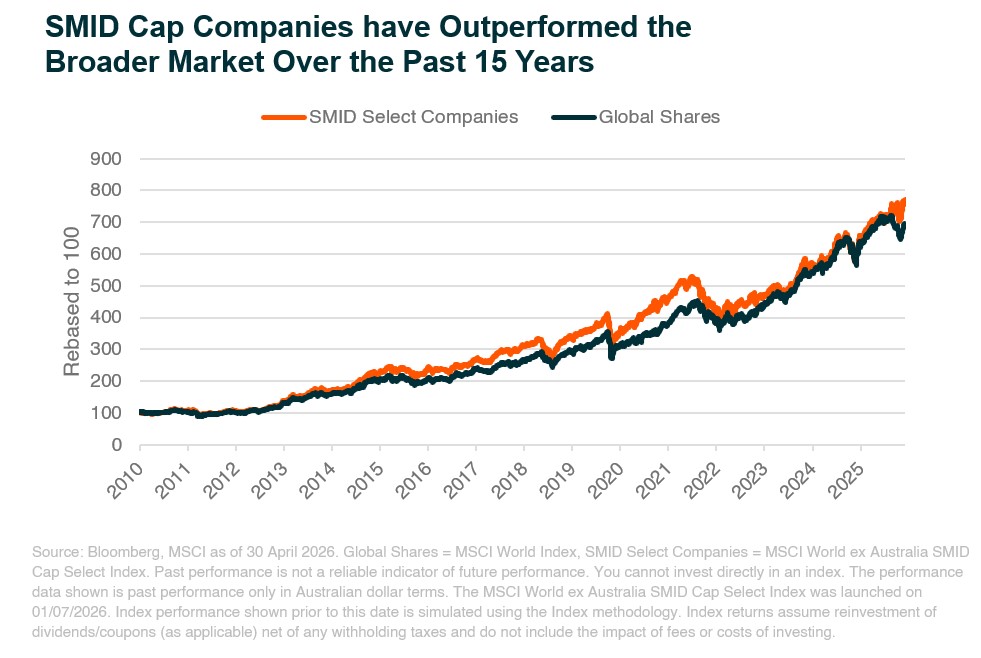
The outperformance of SMIDs is generally attributed to a combination of structural and behavioural factors. Academic research, most notably Fama and French, identified a “size premium,” whereby smaller capitalisation stocks have historically delivered higher returns than large caps, reflecting their greater sensitivity to economic conditions and higher volatility, which requires additional compensation for risk.1
Within this context, the inclusion of mid-cap equities is critical. Mid-caps combine key attributes of both small and large-cap companies, typically exhibiting lower volatility and stronger business quality than small caps, while retaining attractive growth characteristics. Having progressed beyond the most capital-constrained and operationally volatile stage of their lifecycle, mid-cap companies generally demonstrate more stable earnings and improved access to financing, while still offering meaningful upside as they scale.
Mid-caps - A Crucial Missing Piece
Despite their role within the capitalisation spectrum, mid-caps remain underrepresented in traditional portfolio construction. Exchange Traded Funds (ETFs) tracking broad-based global equity indices traditionally have the vast majority of their allocation to large-cap stocks, with allocations to mid-caps insufficient to provide meaningful exposure2. This may prompt investors to look at a solely pure-play small cap strategy, however, that too comes with a structural limitation. As companies grow and exit the small-cap universe, they are removed from the benchmark, forcing investors to sell businesses at the point where growth is often accelerating. This results in a loss of exposure to some of the most attractive phases of the corporate lifecycle. Incorporating mid-caps addresses this gap by allowing investors to maintain exposure as companies transition from early-stage growth to more established businesses. As a result, SMIDs provide more continuous exposure across the corporate lifecycle, capturing both early-stage growth and subsequent scaling.
While small-cap companies have historically delivered a higher long-term return premium than mid-caps, this outperformance has not been consistent across all market environments.
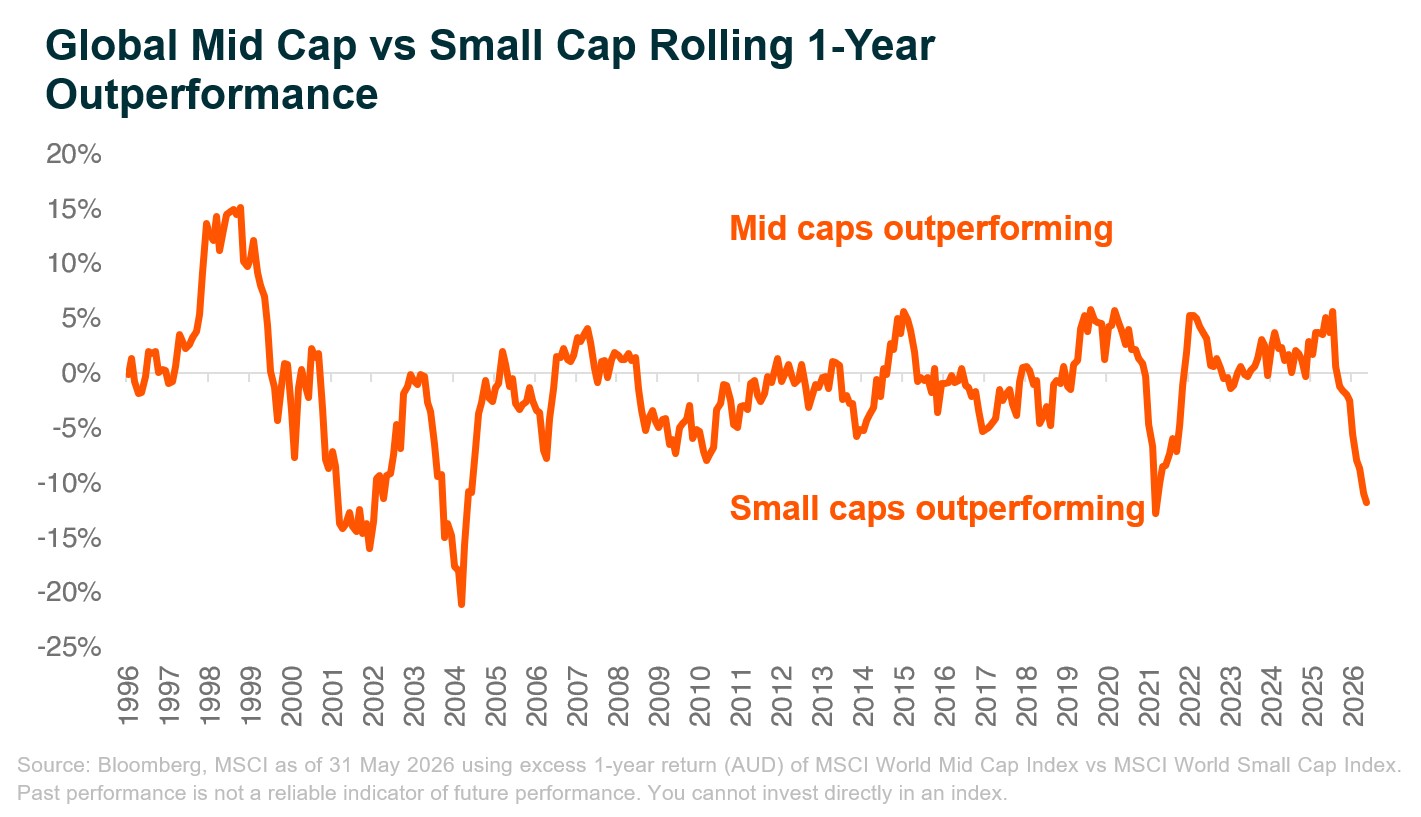
Small caps have outperformed mid-caps 60% of rolling one-year periods over the past 30 years, highlighting that there are periods where mid-caps have led returns. In addition, small caps have historically exhibited greater volatility and slightly deeper drawdowns. Despite the high correlation between the two segments, combining small and mid-caps can provide more balanced exposure across the market-cap spectrum and may help improve the risk-adjusted profile of a dedicated size factor allocation.
Evolving Business Leaders with Improving Fundamentals
The case for SMIDs is particularly compelling in the current environment, where market concentration has reached elevated levels. According to MSCI, the top 10 constituents of the MSCI World Index now account for more than a quarter of the index’s total weight, representing a significant increase over the past 15 years.3
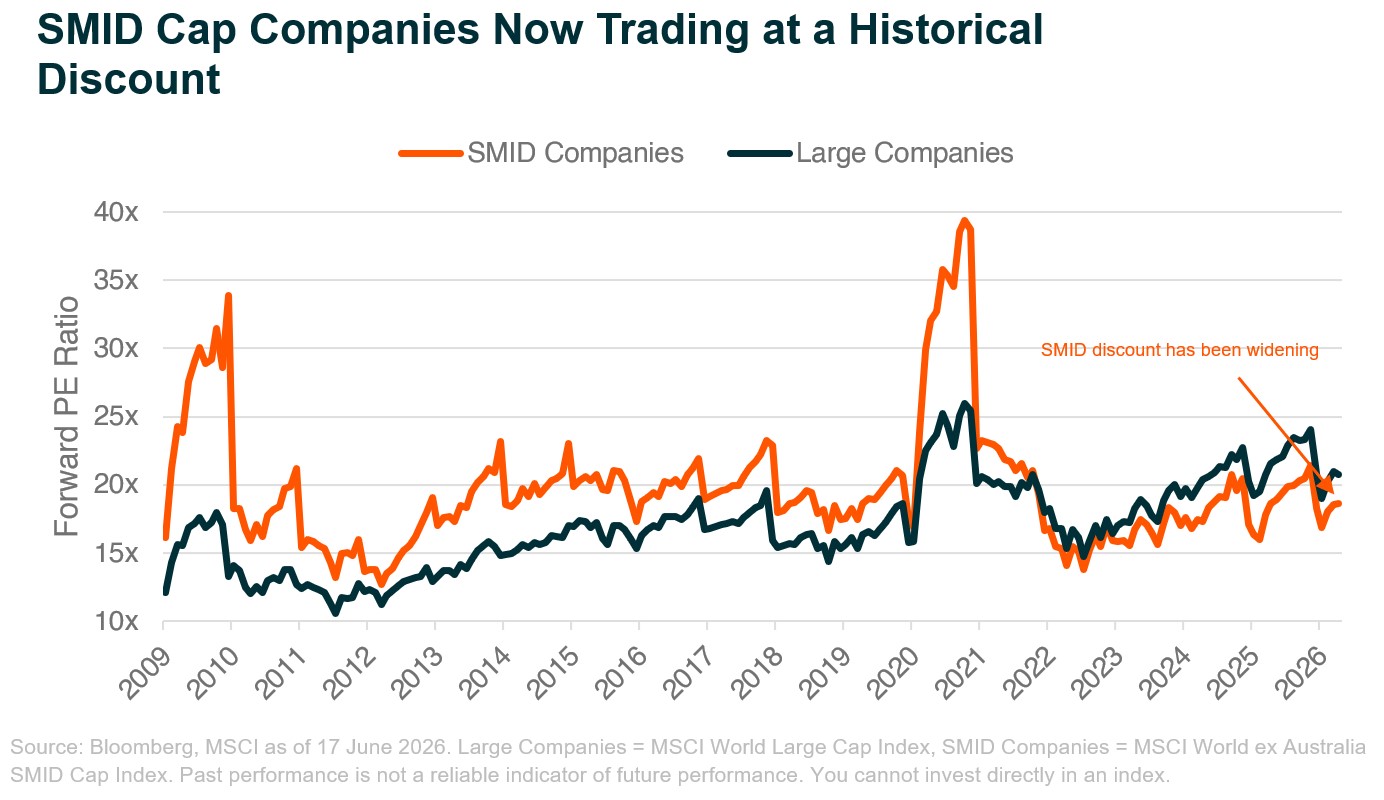
This dynamic has driven a meaningful valuation distortion. Historically, SMID companies have tended to trade at a premium to large caps, reflecting their higher growth potential and greater earnings sensitivity. However, this relationship has shifted materially since 2022, with SMIDs moving to a discount relative to large caps and the valuation gap continuing to widen. In theory, companies with stronger long-term growth prospects would be expected to command a premium valuation, yet the unprecedented concentration and valuation expansion of mega-cap equities has instead compressed relative valuations across the broader SMID universe. The forward PE of SMID companies have fallen from 23x to 18x over the past five years, while large-caps have remained relatively unchanged.
Importantly, the fundamental profile of the segment has materially improved. The perception of SMIDs as lower quality is becoming increasingly outdated, with metrics such as return on equity (ROE) and operating margins sitting in the top decile of their 10-year ranges, signalling enhancements in profitability and operating efficiency. Moreover, this improvement has not necessarily been accompanied by elevated financial risk. While absolute net debt levels have trended higher, this has been offset by stronger earnings growth, resulting in a decline in overall leverage. This indicates that SMID balance sheets have strengthened, with companies becoming increasingly capable of servicing their debt obligations through underlying free cash flow generation, rather than relying on additional leverage to drive returns.
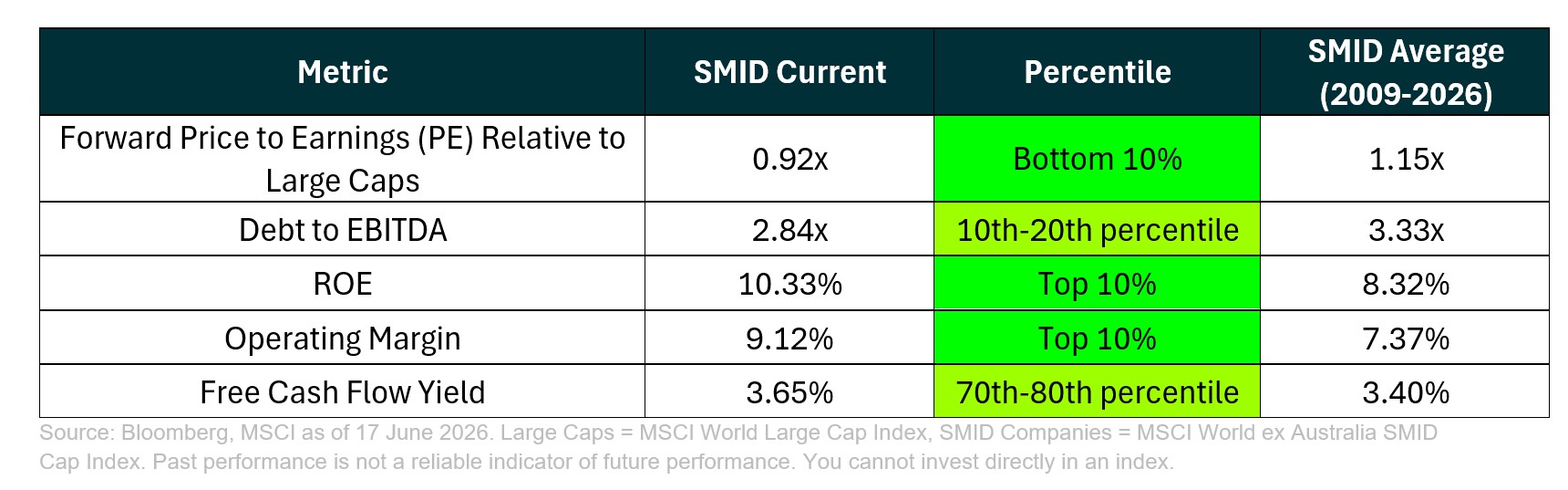
Taken together, the evidence points to a growing disconnect between investor perception and reality. SMIDs continue to be priced as lower-quality assets despite evidence of improving profitability, stronger margins and greater balance sheet resilience. This creates a compelling opportunity for investors, providing access to a segment whose fundamentals have strengthened materially, while valuations have yet to fully reflect that improvement.
Cyclical Tailwinds - Built for the Recovery Phase of the Cycle
The primary concern with SMIDs remains their structural sensitivity to financial conditions. Smaller companies are inherently more sensitive to changes in financial conditions, with a higher proportion of floating-rate debt and shorter debt maturities increasing exposure to refinancing risk during periods of rising rates.4 This dynamic was clear in the 2022-2024 tightening cycle, where a sharp increase in US policy rates alongside rising inflationary pressures contributed to a pronounced period of SMID underperformance. Beyond refinancing risk, SMIDs are also disadvantaged by less diversified revenue streams, more limited access to capital markets, and a greater reliance on external financing, amplifying earnings sensitivity during periods of stress.
However, this same cyclicality supports the long-term return profile of the asset class. The historical outperformance of SMIDs relative to large caps is closely tied to the direction of the economic cycle. A key driver is that companies within the SMID universe tend to be less globalised, making them more sensitive to changes in the domestic business cycle. As a result, SMIDs typically lag during periods of tightening and economic contraction but recover more strongly as growth stabilises and financial conditions improve.
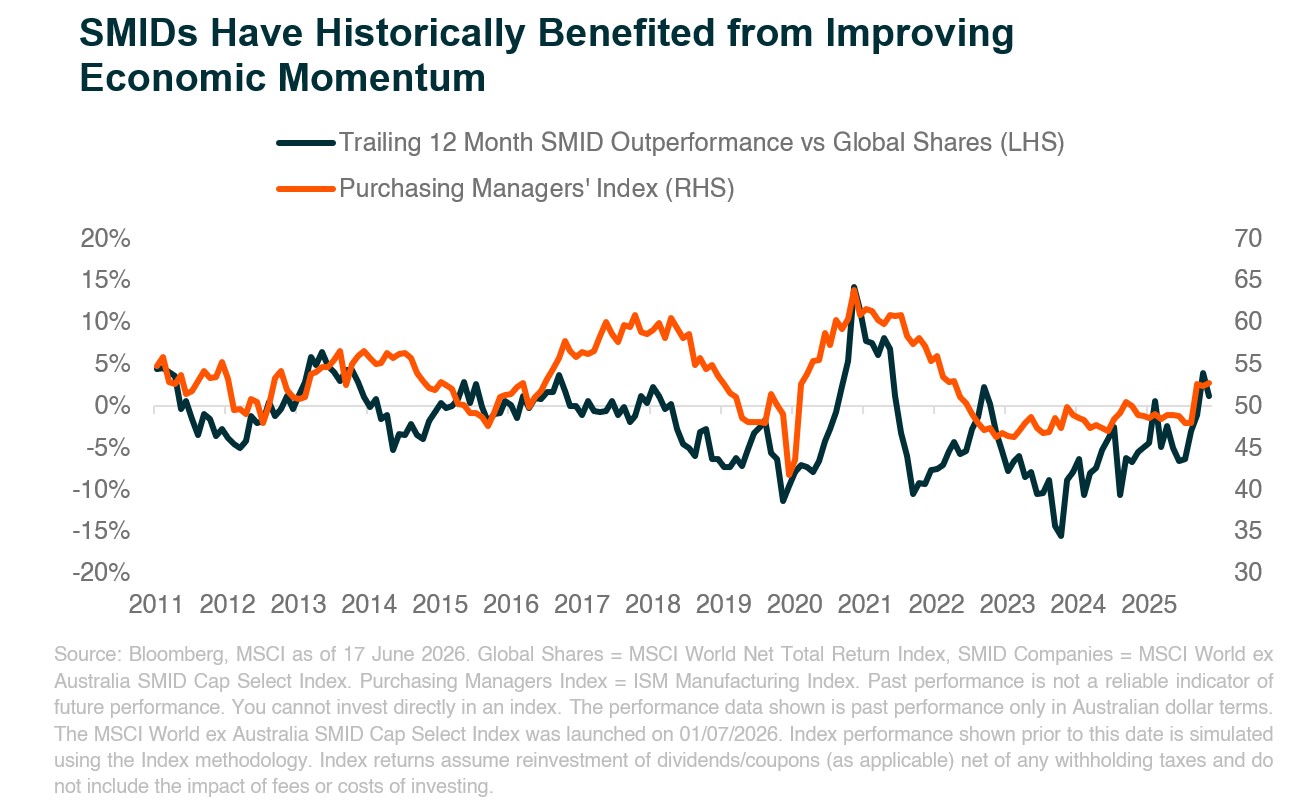
Purchasing Managers' Index (PMI) data provides a useful forward-looking indicator of economic activity, with readings above 50 indicating expansion and readings below 50 signalling contraction. Given their greater sensitivity to economic growth and business investment, SMID companies have historically performed best during periods of accelerating economic activity. Indeed, SMID relative performance has typically been weakest when PMIs are below 50, but improves materially as PMIs move into expansion territory, with the strongest average outperformance occurring during the early-to-mid expansion phase (PMI 50-55). Following an extended period of sub-50 PMI readings, the recent recovery in PMIs above 50 has coincided with a meaningful improvement in SMID relative performance, suggesting the asset class may be entering a more favourable phase of the economic cycle.
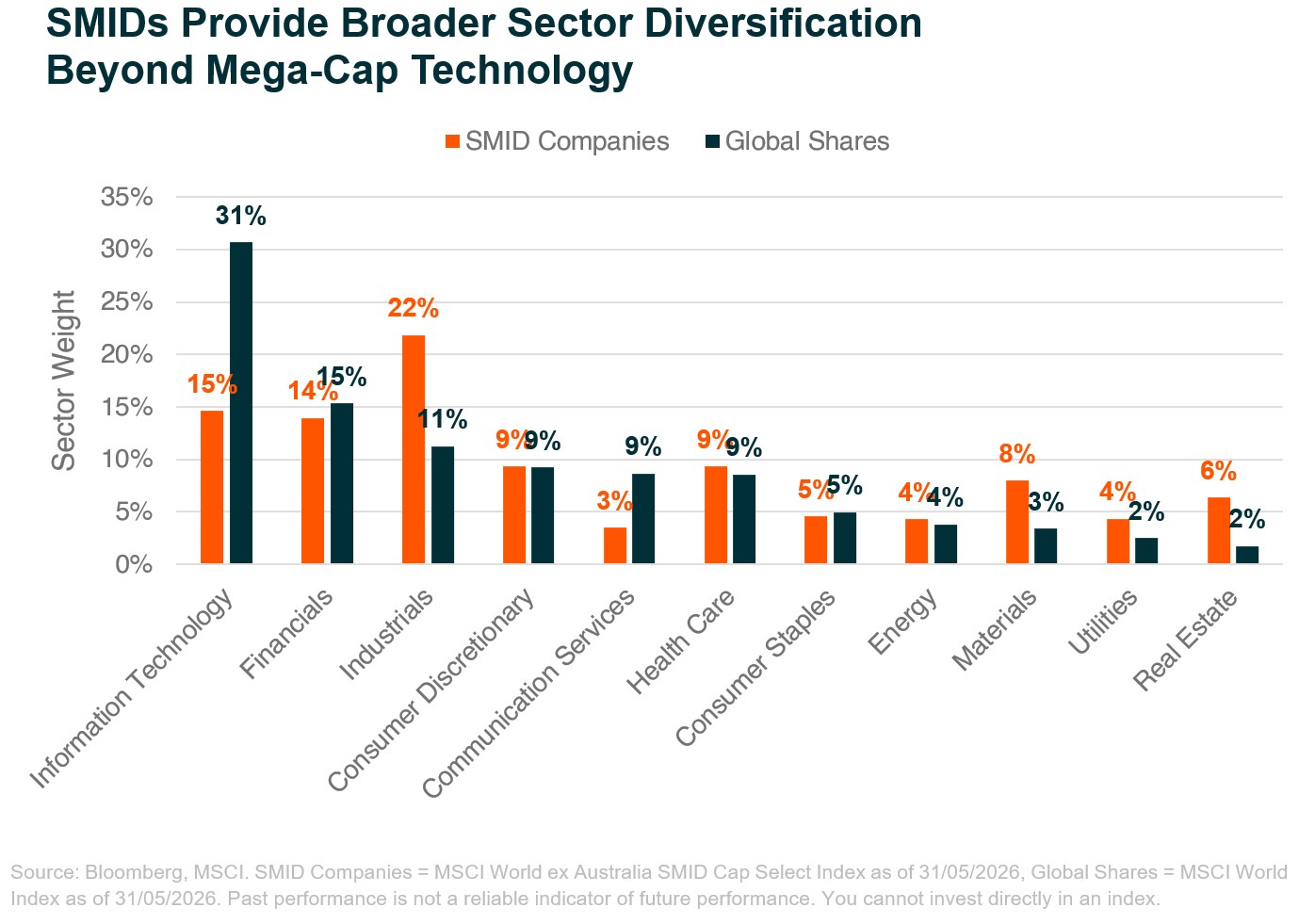
The relationship between SMIDs and the economic cycle is further supported by index composition, with structurally higher allocations to cyclical sectors relative to large caps. While this increases sensitivity to economic conditions, it also provides diversification. Greater exposure to sectors such as industrials and materials means SMIDs are more responsive to changes in economic activity. As PMI moves from contraction into expansion, earnings expectations in these sectors tend to improve disproportionately, supporting relative outperformance. In contrast, large caps remain more concentrated in defensive and growth sectors.
This reinforces that SMIDs should not be viewed as a substitute for large caps, but as a complementary allocation across the cycle. Large-cap exposure provides scale and resilience during tightening periods, while SMIDs offer access to the segment of the market that can recover more strongly as policy pressure eases and growth stabilises.
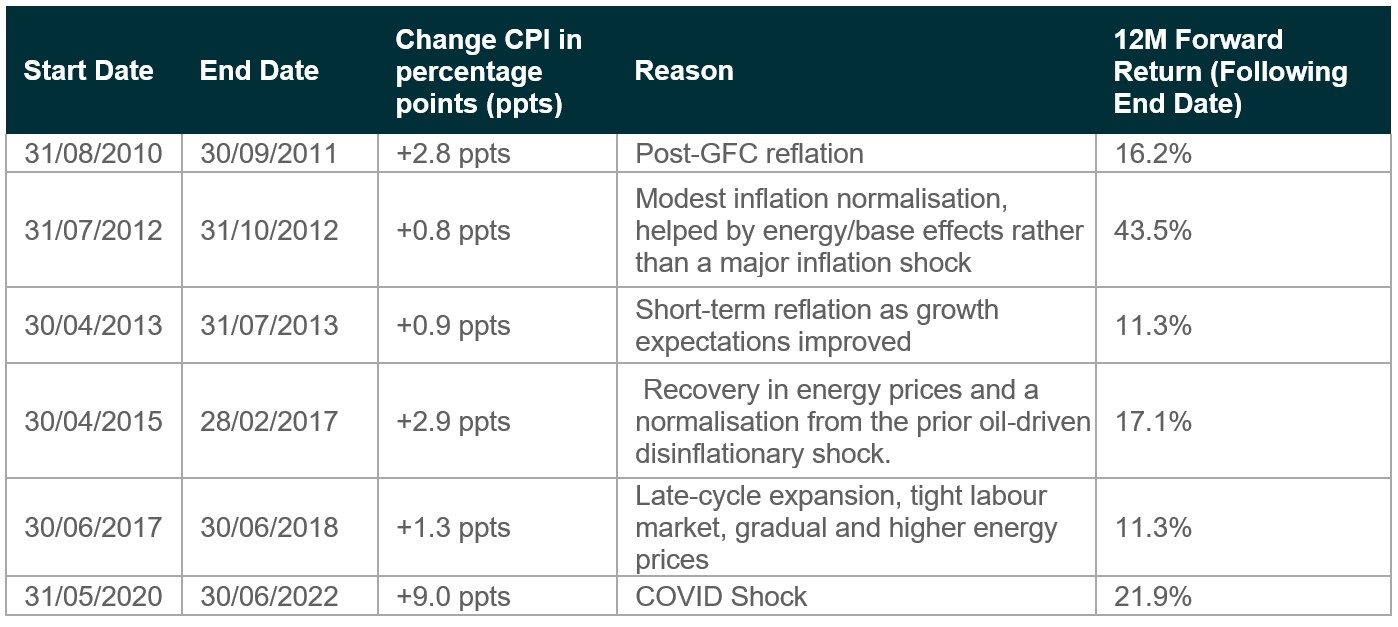
Rising geopolitical tensions and renewed pressure on energy prices have stirred concerns around inflation persistence and further policy tightening, both typically viewed as headwinds for SMIDs. Historically, SMIDs have tended to underperform during periods of accelerating inflation and aggressive monetary tightening. However, as inflationary pressures begin to ease and the pace of policy tightening slows, SMIDs have generally stabilised and recovered, with historical data showing both positive forward returns and periods of relative outperformance versus large-cap equities.
SMID Performance Has Historically Rebounded After Inflation Pressures
The key distinction for the current environment is that while inflation risks remain and further policy tightening cannot be ruled out, financial conditions are no longer deteriorating at a pace seen during the 2022-2024 tightening cycle. As the pace of tightening moderates and financial conditions remain broadly supportive, a key headwind that weighed on SMIDs during the tightening cycle becomes less pronounced, providing a more supportive environment.
Making the Global SMID Opportunity Accessible For Australian Investors
The Global X MSCI International Small and Mid Cap ETF (ISMD) provides exposure to the SMID segment through the MSCI World ex Australia SMID Cap Select Index. The Index targets 300 constituents, selected from developed market regions, with proportional diversification constraints applied across regions, size and sectors relative to the broader MSCI World ex Australia SMID Cap Index. ISMD is the first Australian-listed index ETF to harness MSCI's marquee global equity universe and specifically targets the small and mid-cap opportunity set cohesively.
While some investors may favour active management for SMID exposure on the basis that it is a less efficient part of the market enabling potential active outperformance, the historical evidence paints a different picture. Despite the perceived opportunity for stock pickers to outperform, the majority of active small and mid-cap managers have underperformed their benchmarks over the past 15 years, often while charging materially higher fees than an index-based strategy.5 The SPIVA Persistence Scorecard further highlights that even when investors successfully identify a top-performing manager, sustaining outperformance remains challenging. Of the small-cap funds ranked in the top quartile, only 2% remained in the top quartile five years later, underscoring the difficulty of consistently generating alpha after fees.6
ISMD provides a transparent and cost-efficient way to access the SMID universe, offering the only index-based exposure to the broader global segment on the ASX and enabling investors to capture the broader opportunity set without relying on manager selection.
Conclusion
As global market leadership becomes increasingly concentrated, investors risk overlooking a significant portion of the global opportunity set that is often underrepresented in traditional global share exposure. Today, SMIDs offer a rare combination of attractive valuations, improving fundamentals and exposure to the next generation of market leaders. For investors seeking to reduce concentration risk and broaden their sources of return, SMIDs represent a compelling complement to traditional large-cap allocations and a more complete approach to global equity investing across the market-cap spectrum.